The hook that holds nothing.
A hook is the weakest part of its own wall. It always lets go in the season you needed it most.
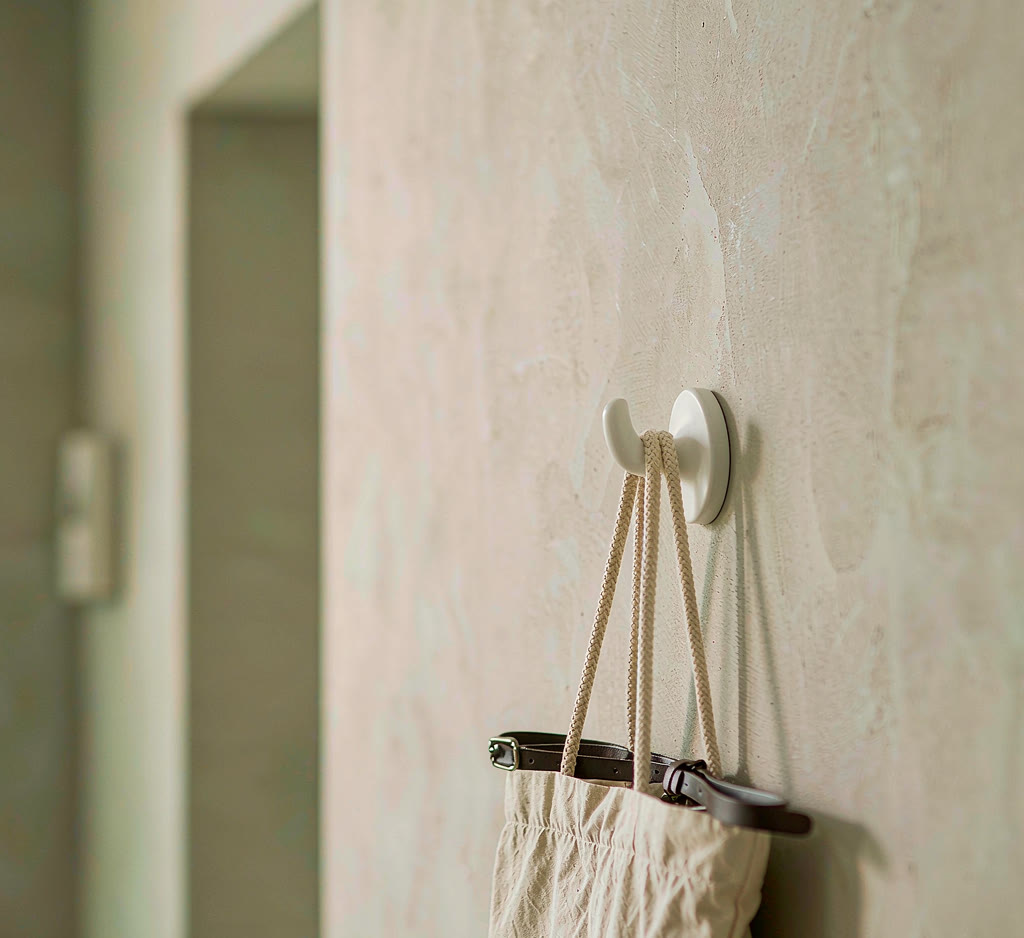
A coat hook is a small promise: I will hold this. Then one morning in November it does not, and the coat is on the floor with a screw somewhere near it.
The hook is never the weak link
Pull a hook off a wall and look at what failed. The metal is fine. The screw is bent. The hole is now an oval, twice the size it started. The load never reached the hook — it stopped at the fixing point, which is a hole in a material that was pretending to be solid.
Why it happens in winter
Walls move. Timber frames take on and give back moisture with the season, plasterboard is a sheet of chalk glued to paper, and a single cold snap is enough to open a fixing by a fraction of a millimetre. Nothing falls off in July because the hole still has friction. By February the same hole has nothing left to grip.
What to look at before you drill
Not the weight of the coat. The thickness of what is behind the paint. There is a stud every 400 or 600 millimetres behind most walls, and finding one is the whole job. Anything hung away from a stud is relying on paper doing the work of timber.
The honest conclusion
A hook that held for two years has not been proved strong. It has been waiting.